Technique
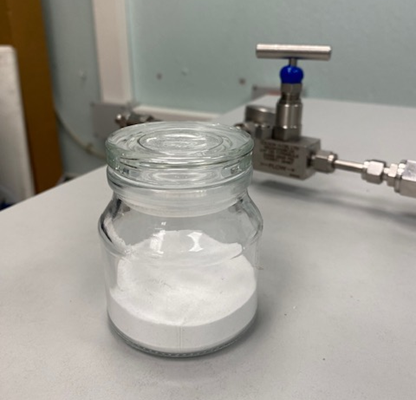
The research and development of H2 storage systems is one of the most important lines of research at international level, given the low energy density of H2, even at high pressures (350 and 700 bar) and when liquefied. NH3 is, in itself, the most efficient, together with methanol, although the latter requires the capture of CO2 in some element of the chain. In turn, NH3 storage in other formats is a well-studied area, with various problems depending on the options. Basically, there are two types of storage, depending on the nature of the physicochemical process used:
Storage by ab/adsorption, employing materials such as zeolites, sepiolites and, in general, ab/adsorbent compounds of a polar nature.
Storage forming stable compounds in reversible processes, i.e., formation of a new complex with the load and return to the original compound with the discharge. Materials that require additional processing to recover the primitive form or the state of charge are discarded.
This second line is chosen, through the formation of amines of the M(NH3)nAx type, from base materials of the MAx type, M being a metal and A an element of the halogen group. Being chlorides the most studied and with better results, the development will be limited to the MgCl2, MnCl2, NiCl2, CaCl2 group or a combination of them.
Based on such verifiable evidence, the aim is to develop a prototype NH3 loading and unloading system on a solid state composite material that meets the objectives and obtains the most relevant certifications in terms of non-toxicity and ammonia release, continuous recycling of the material (loading and unloading), fire and water resistance, the whole being non-toxic, inert and environmentally compatible.
The impact of such a demonstrator would be enormous in allowing the safe handling and storage of NH3:
–Fertilizer manufacturers
–General energy storage
–Shipping (highly sensitized to ammonia toxicity).
–CO2-free multipurpose fuel
–Application in industries with H2 and NH3 heat treatments (refractories, metals, etc).